
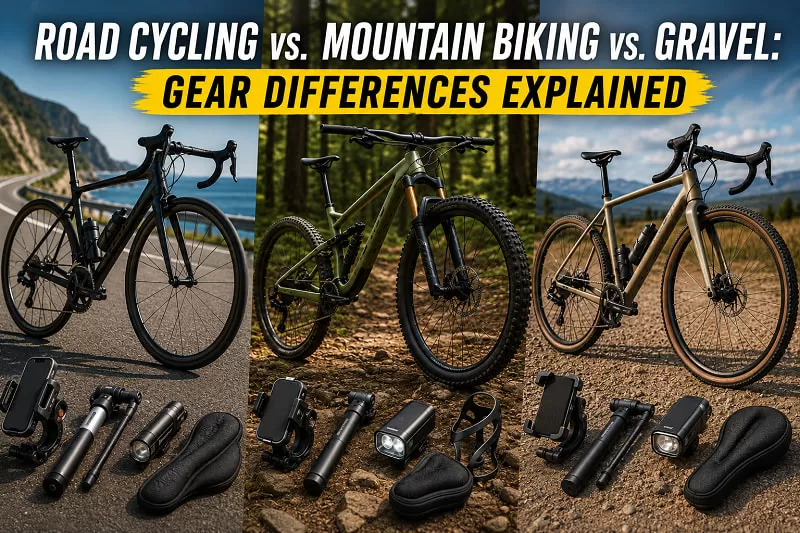
Choosing between road cycling, mountain biking, and gravel riding is not just about where you ride—it directly affects the equipment you need, long-term maintenance costs, riding comfort, and performance. While many accessories appear similar at first glance, the demands of speed-focused road riding, rugged mountain trails, and mixed-terrain gravel adventures require significantly different gear setups.
For riders deciding which discipline fits their needs—or retailers, distributors, and clubs selecting suitable cycling equipment—understanding these gear differences can help avoid unnecessary spending and improve riding experience from the start.
| Category | Road Cycling | Mountain Biking | Gravel Riding |
Terrain | Smooth pavement | Technical off-road trails | Mixed surfaces |
Riding Goal | Speed & efficiency | Control & durability | Versatility & endurance |
Tire Width | Narrow | Wide, aggressive tread | Medium-width, versatile tread |
Bike Weight | Lightweight | Heavier, stronger frame | Mid-range |
Riding Position | Aggressive & aerodynamic | Upright & stable | Balanced comfort |
Suspension | Usually none | Front or full suspension | Usually rigid |
Helmet Type | Aero/lightweight | Extended protection | Lightweight with trail features |
Clothing Style | Tight aero fit | Durable loose or fitted | Comfort-focused |
Storage Needs | Minimal | Compact trail essentials | High carrying capacity |
Although overlap exists between disciplines, buying gear designed for the wrong riding style often leads to poor comfort, faster wear, or unnecessary upgrades.
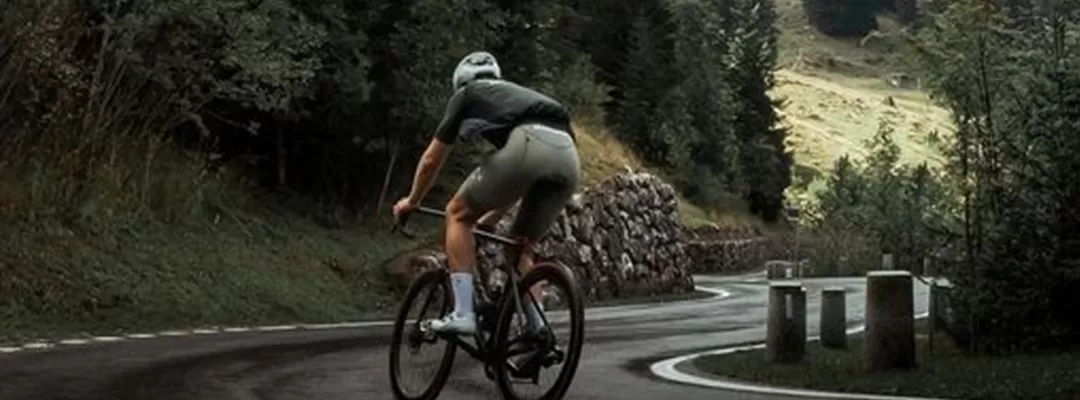
Road cycling equipment prioritizes speed, aerodynamics, and weight reduction. Every component is designed to minimize resistance and maximize efficiency over paved roads.
Road cyclists generally prefer:
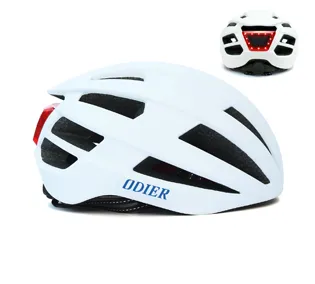
Lightweight helmets
Aerodynamic cycling apparel
Slim tires with low rolling resistance
Minimal accessory weight
Compact repair kits
Unlike mountain riders, road cyclists rarely prioritize impact resistance or rugged durability. Instead, efficiency becomes the deciding factor.
Road cycling shoes typically use stiff carbon or composite soles to maximize pedaling efficiency. Clipless pedal systems are standard because they improve power transfer during long rides or climbs.
However, this setup may feel uncomfortable for riders who frequently stop or walk.
Road riders usually carry:
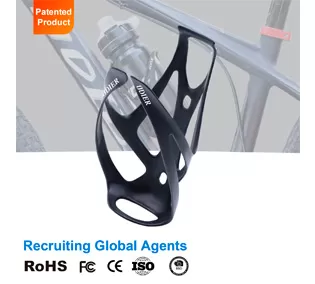
Lightweight bottle cages
Saddle bags for emergency repairs
Compact frame pumps or CO₂ inflators
Cycling computers for performance tracking
Because rides often occur near urban roads or support services, large storage systems are less common.
Road cycling gear works best for riders focused on:
Speed and fitness
Group rides
Competitive training
Long-distance paved riding
If your riding primarily happens on asphalt and efficiency matters most, road cycling gear delivers the strongest performance advantage.
Mountain biking introduces a completely different set of challenges: rocks, roots, steep descents, mud, vibration, and impact.
As a result, gear choices shift from lightweight efficiency to durability and rider protection.
Compared with road cycling, mountain biking often requires:
Stronger helmets with extended rear coverage
Protective gloves
Knee or elbow protection for aggressive trails
Durable eyewear against dust and debris
The risk profile is significantly higher, particularly for technical singletrack or downhill riding.
Mountain biking equipment emphasizes control.
Riders often prioritize:
Wide tires with aggressive tread
Suspension forks or rear shocks
Flat pedals for easier repositioning
Wider handlebars for stability
Unlike road riders chasing marginal weight savings, mountain bikers usually accept extra weight in exchange for reliability and confidence on technical terrain.
Trail riders frequently carry:
Multi-tools
Tire plugs
Hydration packs
Spare tubes or tubeless repair kits
Because riders may be far from roads or repair shops, self-sufficiency matters more.
Mountain biking gear is ideal for:
Technical off-road riding
Forest trails
Rocky terrain
High-adrenaline riding styles
Riders prioritizing control over speed
If your routes regularly involve rough terrain, investing in stronger and more protective equipment prevents expensive failures later.
Gravel cycling sits between road and mountain biking.
It combines the endurance efficiency of road cycling with some of the durability and adaptability found in mountain biking.
For many recreational riders, gravel equipment has become attractive because it handles changing conditions without requiring multiple bikes.
Gravel riders often encounter:
Pavement
Dirt roads
Loose gravel
Mild trails
Long adventure routes
Because terrain changes frequently, gear choices must remain flexible.
Typical gravel setups include:
Wider tires than road bikes
More relaxed geometry for comfort
Additional mounting points
Expanded storage capacity
Many gravel riders value endurance over speed.
As a result, equipment often includes:
Handlebar bags
Top tube storage
Larger hydration systems
Comfortable saddles
Multi-surface tires
Unlike traditional road cycling, gravel setups are usually designed for all-day rides rather than maximum speed.
Gravel apparel tends to be less race-focused than road cycling kits.
Riders often choose:
Relaxed-fit jerseys
Durable bib shorts
Layering systems
Windproof outerwear
This flexibility becomes especially important on remote or changing terrain.
Gravel gear works best for riders who want:
Flexibility across terrain
Adventure riding
Long-distance comfort
Light off-road exploration
Fewer limitations on route planning
For riders unsure whether they prefer pavement or dirt, gravel equipment often provides the best starting point.
The long-term ownership cost varies significantly depending on riding conditions and maintenance needs.
| Expense Area | Road Cycling | Mountain Biking | Gravel Riding |
Entry Cost | Moderate to High | Moderate to High | Moderate |
Maintenance Frequency | Lower | Higher | Moderate |
Tire Wear | Lower | Higher | Moderate |
Crash Damage Risk | Lower | Higher | Moderate |
Upgrade Potential | High | High | High |
Mountain biking usually results in higher maintenance expenses because of suspension servicing, drivetrain wear, and greater impact exposure.
Road cycling can become expensive due to premium lightweight components and performance upgrades.
Gravel riding often sits in the middle, offering a balanced cost-to-versatility ratio.
The answer depends on where you actually ride.
You ride mostly on paved roads
Speed and fitness are priorities
You enjoy structured training
You prefer group riding culture
You have access to trails
You enjoy technical challenges
Durability matters more than speed
Adventure and terrain variation appeal to you
You want flexibility
Your routes vary frequently
Comfort matters
You are unsure which discipline suits you long term
For many new riders, gravel cycling provides the least restrictive entry point because it accommodates both pavement and light off-road riding.
A road-style helmet or lightweight saddle may look attractive but perform poorly for trail riding.
Gear should match riding conditions first.
Mountain biking equipment generally requires more frequent servicing due to dirt, impacts, and exposure.
Ignoring maintenance costs often leads to premature component failure.
Many beginners buy aggressive road setups before understanding their riding preferences.
In practice, a slightly more comfortable fit often results in longer and more enjoyable rides.
If you are still exploring riding styles, overly niche gear can become limiting.
Versatile equipment usually provides better long-term value for developing riders.
To some extent, yes. However, narrow tires, aggressive riding positions, and limited storage often reduce comfort on gravel terrain. Riders planning regular gravel use generally benefit from more adaptable equipment.
Not necessarily. Gravel riding is growing because of its flexibility, but road cycling remains the preferred choice for speed-focused training and competitive riding.
Mountain biking helmets provide greater coverage and impact protection because trail riding involves higher crash risk and unpredictable terrain.
Road cycling typically requires less maintenance because paved surfaces create less drivetrain wear and expose components to less dirt and impact.
Road cycling, mountain biking, and gravel riding each demand a different equipment philosophy.
Road cycling emphasizes efficiency and speed. Mountain biking focuses on durability and control. Gravel riding prioritizes adaptability and long-distance comfort.
Instead of choosing gear based on trends or aesthetics, riders should evaluate where they actually ride, how often they ride, and what kind of experience they want over the long term. The right setup reduces frustration, improves performance, and ultimately makes cycling more enjoyable and cost-effective.