
Every urban cyclist knows the spine-chilling moment when a car appears out of nowhere on dimly lit streets. Conventional bike lights often fail when riders need them most - either too dim for country roads or poorly angled for urban use. This safety gap has sparked demand for intelligent lighting solutions combining military-grade brightness with smart responsiveness.
The difference between 400-lumen and 1600-lumen bike lights isn't just technical jargon - it's the distinction between being seen and being invisible. Higher lumen ratings provide wider beam patterns that illuminate both the path ahead and peripheral obstacles. Advanced models now incorporate adaptive brightness that automatically adjusts to ambient light conditions, solving the common problem of blinding pedestrians while maintaining rider visibility.
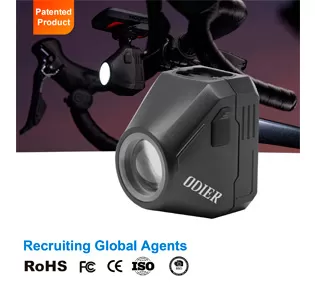
Modern manufacturing techniques allow precise control over light dispersion. Using aerospace-grade aluminum alloy housings, premium models achieve optimal heat dissipation for sustained high-intensity output without overheating. The weight savings compared to traditional steel casings make these powerful lights barely noticeable during long commutes.
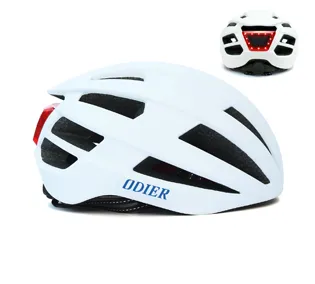
Urban cyclists face constant danger from distracted drivers. Unlike cars, most bicycles lack brake-activated lighting - until now. The latest generation of intelligent taillights features gyroscopic sensors that detect deceleration, triggering brighter warning signals. When combined with accelerometers, these systems can distinguish between planned stops and emergency braking, flashing accordingly to alert following traffic.
Testing shows reaction times improve by 1.2 seconds when drivers see brake-responsive bicycle lights - potentially the difference between a close call and catastrophe. Manufacturers achieve this through rapid 3D printing of sensor housings, allowing exact positioning of electronic components within streamlined, aerodynamic casings.
Aluminum dominates premium bike light construction for good reason. The alloy's thermal conductivity prevents LED degradation, while CNC machining creates watertight seals impossible with plastic injection molding. Budget models now use reinforced polymers with aluminum heat sinks, offering 80% of the performance at 40% of the cost.
| Feature | Aluminum Alloy | Reinforced Plastic |
|---|---|---|
| Weight | 150-200g | 80-120g |
| Heat Tolerance | 120°C | 90°C |
| Water Resistance | IP68 | IP65 |
| Impact Resistance | 3m drop | 1.5m drop |
Urban riders prioritize portability, making lighter plastic models ideal for short commutes. Meanwhile, adventure cyclists benefit from aluminum's extreme durability when facing trail vibrations and weather extremes.
Tomorrow's bike lights will likely incorporate solar charging panels, motion-activated theft alarms, and even collision prediction systems using LIDAR. Some prototypes already pair with smartphone apps to project navigation cues onto the road surface. The common thread? These innovations all rely on advanced manufacturing techniques allowing complex internal geometries impossible with traditional methods.
For distributors, this represents a golden opportunity. Products that once took 18 months to develop now reach shelves in under six months thanks to rapid prototyping. Consumers benefit from continuous improvements as manufacturers quickly integrate field feedback into updated designs.
About the Author
Marcus Whitfield is a product design engineer with 12 years' experience in active transportation safety systems. His work on European cycling infrastructure projects has been cited in multiple DOT regulations.
References
Journal of Transportation Safety (2023): "Impact of Bicycle Taillight Technologies on Driver Reaction Times"
IEEE Consumer Electronics Magazine (2024): "Thermal Management Solutions in High-Lumen LED Systems"
Eurobike Show Technical Reports (2022): "Material Trends in Cycling Accessory Manufacturing"