
— Uncovering the Myths and Truth Behind “Functional Threshold Power”
In China's cycling community, when people mention Functional Threshold Power (FTP), most riders immediately think of one simple definition:"FTP is the highest average power you can sustain for one hour."
That phrase gets repeated so often it's practically become gospel. But today, we're here to tell you — that's not entirely correct.
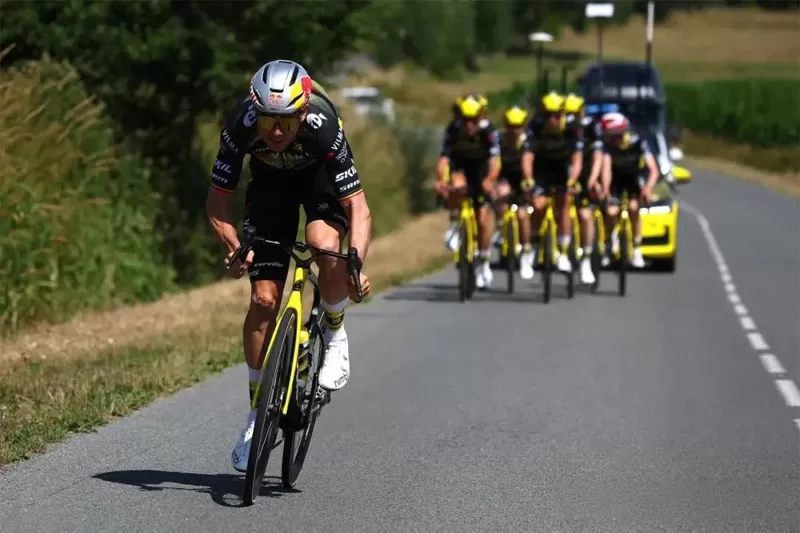
FTP represents the highest power output you can sustain steadily without completely falling apart — typically for about 30 to 60 minutes, though well-trained riders might hold it longer.
It's widely viewed as the dividing line between aerobic and anaerobic endurance:
Below FTP: Your body relies on aerobic metabolism, maintaining internal balance — you can keep going "comfortably hard."
Above FTP: Lactate accumulates rapidly, your body shifts into anaerobic metabolism — the countdown to burnout begins.
So, FTP is about a threshold, not your maximum or your explosive power.
Physiologically, FTP roughly corresponds to but is slightly below:
the Lactate Threshold 2 (LT2)
the Ventilatory Threshold 2 (VT2)
And it's often considered slightly above:
Critical Power (CP)
In short, FTP is an empirical value, not a direct lab measurement — but it's incredibly useful for gauging endurance performance in real-world training.

In practice, almost no one actually performs a true 60-minute all-out test. Why? Simple reasons:
It's brutally painful and mentally demanding.
It's hard to control external factors like environment, pacing, and fatigue.
That's why most cyclists use simplified testing methods, such as:
20-minute test × 0.95
Estimation algorithms used by smart training platforms (e.g., Zwift, TrainerRoad)
Ramp Tests that calculate FTP via predictive modeling
However, all of these are just estimation tools, not a direct measurement of your "true" FTP.
And remember — everyone's lactate kinetics and energy system balance differ:
Some riders can sustain high power for long durations.
Others are more anaerobic or explosive in nature.
That's why FTP ≠ endurance limit, and it's not the only indicator of cycling performance.
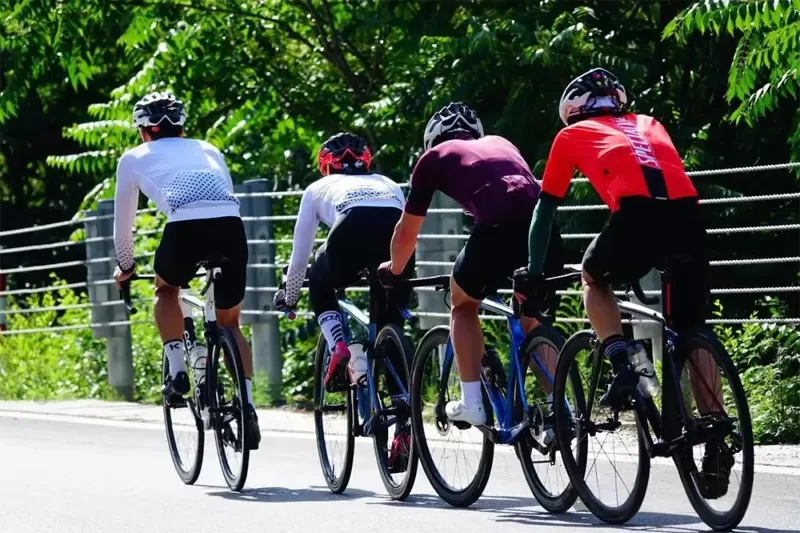
Differentiate between physiological thresholds: You'll better understand the relationships among LT (Lactate Threshold), VT (Ventilatory Threshold), AT (Anaerobic Threshold), and CP (Critical Power).
Design precise training zones: FTP helps structure your Zone 2 to Zone 6 workouts, so your training is progressive and targeted.
Integrate multi-parameter monitoring: Combine FTP with heart rate, muscle oxygen (NIRS), respiration rate, and skin temperature/heat flux for personalized performance tracking.
Avoid training mistakes and fatigue: A higher FTP doesn't always mean you're a stronger rider — it's how you apply FTP to guide training that truly matters.
In the next article, we'll dive deeper into:
How FTP actually relates to lactate thresholds, ventilatory thresholds, and critical power — and which one is more scientifically accurate.
Why "training by FTP alone" isn't enough.
Have questions about FTP? Drop them in the comments — we'll cover them in future posts.
FTP is the gateway to scientific training — but it's not the whole story.
Understanding your thresholds, connecting physiological data, and training systematically are what transform you from simply "pushing harder" to riding smarter, longer, and stronger.
Follow us, —ODIER, and become a cyclist who truly understands training.